George Mueller Prayed Over an Empty Table for 300 Hungry Orphans
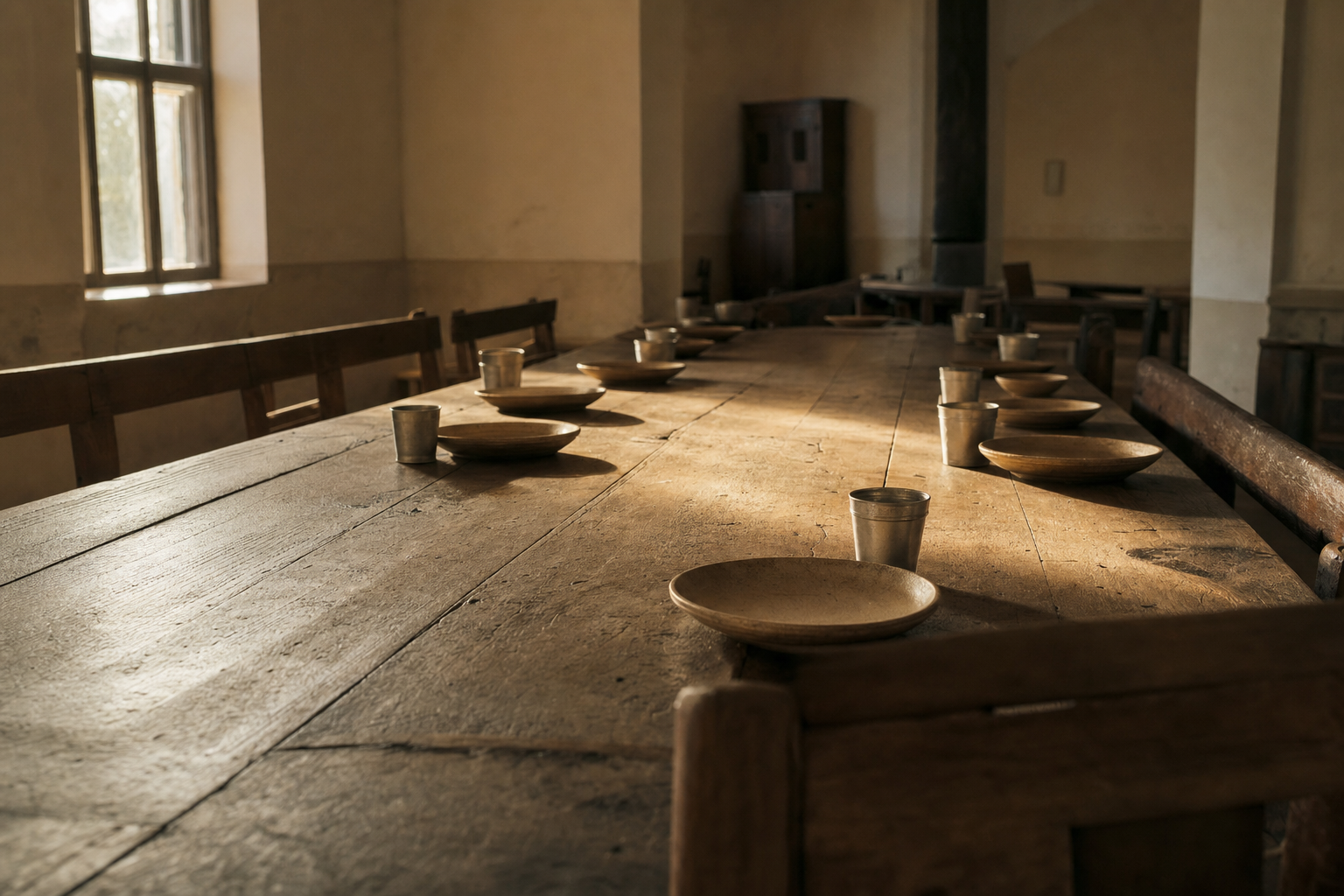
Picture a dining hall with three hundred children seated at the tables. Plates in front of them. Empty plates. There is no bread in the kitchen, no milk in the pantry, nothing coming that anyone can see. And the man responsible for feeding them stands up to say grace over food that does not exist.
That was George Mueller on an ordinary morning in nineteenth-century Bristol. He ran orphanages that eventually cared for more than ten thousand children, and famously he never once asked a donor for money. He asked God. On this particular morning the news reached him that a house full of kids had nothing to eat. So he did the strangest thing. He gathered the children, sat them down, and thanked God for the meal they were about to receive.
While he was still praying, a baker knocked. He had not been able to sleep, kept waking from a dream that the orphans needed bread, and had stayed up through the night baking. Then a second knock. A milkman whose cart had broken down right outside the gate, with a load of milk that would spoil before repairs came. Could the children use it?
The order of the verbs matters
Read the sequence carefully, because our instinct usually runs the other way. Mueller did not wait for the bread to arrive and then give thanks. He gave thanks, and then the bread arrived. He prayed as if the answer were already true, before there was a single crumb of evidence on the table.
Most of us do the reverse. We want to see God move, and then we will pray with expectation. We keep our confidence in reserve until the situation improves, treating faith like a reward we hand out once God has proven himself. That is exactly backward from how Scripture describes prayer. Jesus told his disciples, "Whatever you ask in prayer, believe that you have received it, and it will be yours" (Mark 11:24, ESV). The believing comes first. The receiving follows.
This is what praying and serving with expectation actually looks like. Not manufactured optimism, and not pretending the pantry is full when it is empty. Mueller knew the shelves were bare. He prayed anyway, out loud, in front of three hundred witnesses, because he was more certain of God's character than of his own circumstances.
Why we hedge our prayers
Our reluctance is not only a personal failing. We were formed by a culture that trusts what it can measure and quietly disbelieves the rest. The philosopher Charles Taylor describes the modern condition as life inside an "immanent frame," a way of seeing the world as a closed system of natural causes with no door left open to anything beyond it. You do not have to consciously reject God to be shaped by that frame. It seeps in. You breathe it. And so even sincere believers pray as though the outcome depends entirely on visible resources, spreadsheets, and probabilities. We ask God for help with the plan we already made instead of asking him to do something the plan cannot account for.
Mueller lived as though the frame were open the whole time. He treated the God who split the sea and multiplied the loaves as the same God who could nudge a sleepless baker toward his oven. He was not praying to a different God than the one you pray to.
So the honest question is not whether God still provides. It is whether you are still asking as though he might.
Praying before the answer shows up
Notice too that Mueller did not just pray. He showed up. He walked into the room with the problem, sat the children down, and put himself on the hook in front of them. Prayer and action were the same motion. He asked God to provide and then acted as though God would, arranging the tables for a meal that had not been delivered. Faith that never leaves the prayer closet is easy to keep vague. Faith that seats three hundred kids at empty tables has to mean something.
You do not have an orphanage. You have something smaller and just as real: a need you have been managing instead of praying about, because you are waiting to see whether God will come through before you risk the disappointment. This week, name that thing. Write down the one request you have been too guarded to make with any real expectation, and then pray it out loud, thanking God for the answer as though it were already on its way. Then take one visible step that only makes sense if he actually shows up. Set the table before the bread arrives.