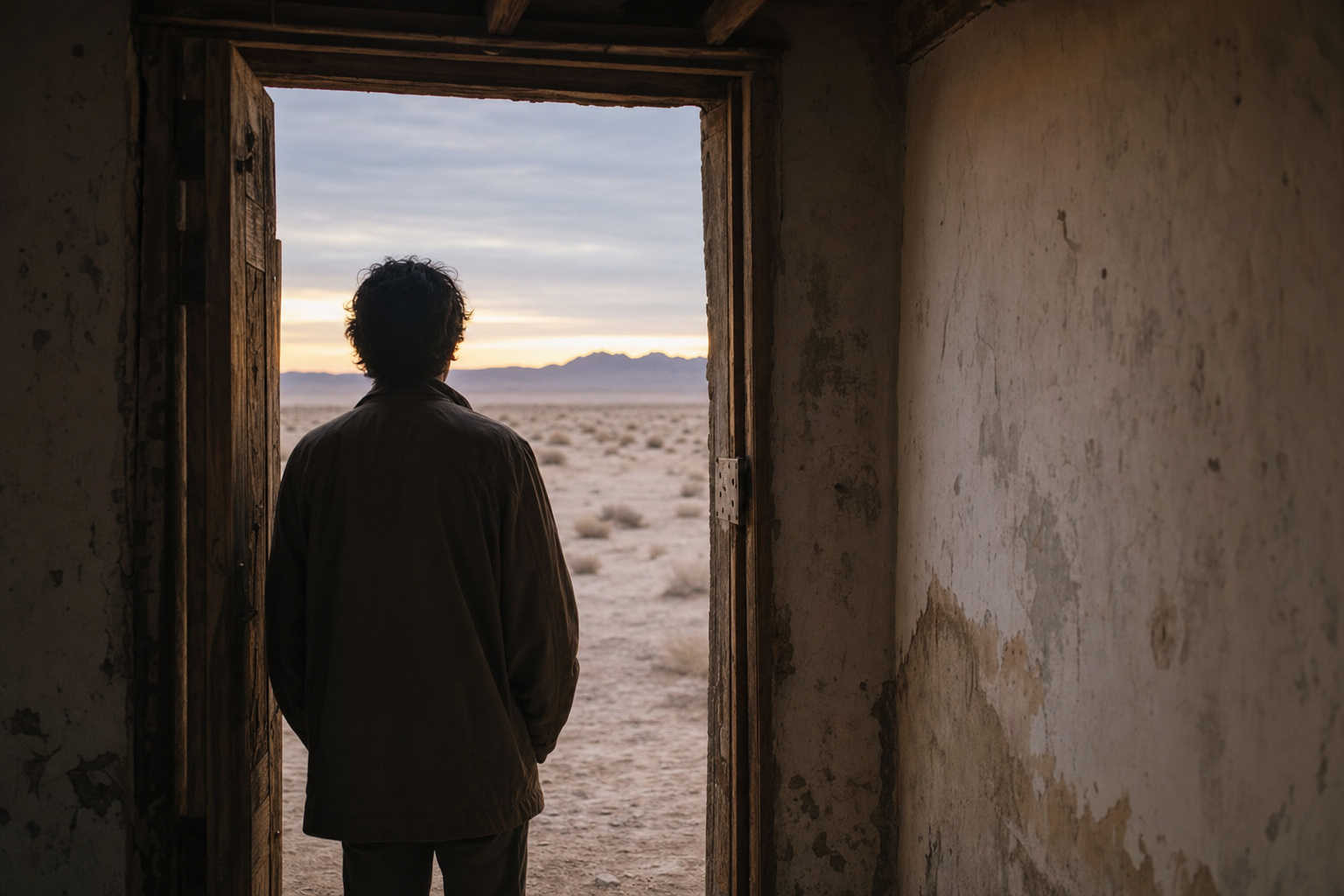
God Is in the Whisper, Not the Mountain
Elijah had just won the fight of his life. On Mount Carmel he called down fire from heaven in front of a hostile crowd, and the God of Israel answered in the most dramatic way imaginable. It was a legendary victory. And then, one chapter later, we find the same prophet collapsed under a broom bush in the desert, praying to die.
You would expect a man fresh off a miracle to be untouchable. Instead he is exhausted, terrified, and done. That whiplash, from the mountaintop to the wilderness in a matter of days, is one of the most honest pictures of the spiritual life in all of scripture.
What actually happened at the broom bush
First Kings 19 slows down and pays attention to Elijah's body before it says a word about his theology. An angel wakes him twice and tells him to eat, because the road ahead is long. Only then, rested and fed, does Elijah make his way to a mountain to hear from God. And what he hears is not what he brought down at Carmel.
A great wind tears the rocks apart, but God is not in the wind. An earthquake shakes the ground, but God is not in the earthquake. Fire passes by, but God is not in the fire. Then comes what the older translations call a still small voice, and the Hebrew renders even more strangely: qol demamah daqqah, something like a thin sound of silence.
And after the fire the sound of a low whisper. And when Elijah heard it, he wrapped his face in his cloak and went out and stood at the entrance of the cave. (1 Kings 19:12-13, ESV)
The man who had just watched God show up in fire now meets him in a whisper. The presence he was probably hoping to feel again, the loud and unmistakable kind, is not the presence he gets. And the whisper is the real thing.
Why the flat days feel like abandonment
Here is where this stops being ancient history. We are trained, more than any generation before us, to equate the presence of God with the intensity of a feeling. That training did not come from nowhere. The devices in our pockets have taught us to expect a new hit every few seconds, to swipe past anything that does not immediately spark, to treat a plateau as a malfunction. James K.A. Smith writes about how our routines quietly form what we love, and the daily liturgy of the scroll forms us to crave the peak and distrust the ordinary.
So when the worship night ends and Monday arrives, and your quiet time feels like reading a phone book, the ambient assumption of the whole culture whispers that something has gone wrong. It hasn't. You have simply come down the mountain, where most of your actual life with God will be lived.
Measure your faith by your feelings and you will be at the mercy of your last good day. One morning you feel close to God and obey him easily. The next morning you feel nothing and quietly conclude he has left. That kind of faith is unstable because feelings were never built to carry that weight.
There will be more days you choose the Lord than days you feel him. That is not a sign of weak faith. That is what faith is.
Choosing him when you can't feel him
Elijah did not get his mountaintop feeling back. He got a whisper, a meal, and a job. God sent him down the mountain to keep going, and the going was the point. Galatians 6:9 puts the same logic in one line: "Let us not grow weary of doing good, for in due season we will reap, if we do not give up." The harvest is promised to the ones who keep their hand on the plow on the days that feel like nothing.
This week, pick the plainest, least exciting slice of your faith - the same chapter, the same prayer, the same ten minutes - and give it a fixed time you will keep whether or not you feel a thing. Sit in the quiet long enough to notice it is not empty. Then do it again tomorrow, and let the whisper be enough.