Who Is Your One? How to Help Someone Take a Single Step Toward Jesus
Somewhere in your phone right now is a name you could pray for tonight. A coworker who mentions God only when something goes wrong. A neighbor who waves but never talks. A family member you've half given up on. Most of us carry someone like that around, quietly, without any real plan for them beyond hoping something changes.
The Apostle Paul had a plan. Writing to a church in Corinth, a chaotic port city full of every kind of person imaginable, he described how he actually approached the people he wanted to reach.
Though I am free and belong to no one, I have made myself a slave to everyone, to win as many as possible. To the Jews I became like a Jew, to win the Jews. To those under the law I became like one under the law, to win those under the law. I have become all things to all people so that by all means possible I might save some. (1 Corinthians 9:19-22, NIV)
Read that slowly and something surprising surfaces. Paul is not describing a single dramatic conversation. He is describing adaptation, patience, meeting people where they already stand. The Greek verb translated "win" here is kerdaino, a word borrowed from the marketplace that means to gain or to profit. Paul talks about reaching people the way a merchant talks about a long, careful investment, not a one-time gamble.
You are not being asked to throw a Hail Mary
Here is where most of us get stuck. We imagine that reaching someone means we have to deliver the whole gospel in one perfect speech and watch them convert on the spot. So we say nothing, because that pressure is unbearable. The bar we set is so high that we never even try.
But nobody comes to faith in a single leap. Think of it as a field with a hundred yards between where a person stands now and where Jesus is. A friend who is openly hostile to God is standing at one end. A friend who quietly believes but has never acted on it is standing much closer to the other. Your job is not to carry someone the whole distance.
Your job is to help your one take a single step.
That reframes everything. A person who has never once considered that God might hear a prayer can move to aware that prayer is real. A person who knows the basic facts about Jesus can move to understanding what those facts mean for their own life. Each of those is one step. And a single step is something an ordinary person can actually help with.
Why the modern moment makes this harder
There is a reason so many believers feel paralyzed here, and it is not simply that we lack courage. We live inside a culture that treats belief as a fiercely private matter, sealed off from conversation the way politics used to be sealed off from the dinner table. What the philosopher Charles Taylor calls the immanent frame trains all of us, believers included, to assume the spiritual dimension is a personal preference nobody should bring up. So we absorb an unspoken rule: keep your faith to yourself. That rule feels like politeness. It functions like a muzzle.
Against that background, even a small comment feels enormous. Which is exactly why the small comment matters. When you tell a stressed coworker "I'll actually pray about that for you tonight," you have quietly broken the spell that says such things cannot be spoken aloud. You have moved your one a step.
What one step actually looks like
Steps are not lectures. Praying for someone and telling them you did it is a step. Inviting them somewhere is a step. Serving them without being asked is a step. Naming God's care for their life in a single unhurried sentence is a step. None of these requires theological training or a dramatic testimony. They require attention and a willingness to be slightly less private than the culture prefers.
And you are not doing it alone. The person you nudge forward this month might get nudged again by a stranger next month, and again by someone else after that, until one day they cross into faith carried by a whole relay of people who each did one small thing. That is how most of us got here. Someone helped us take a step long before we could see the finish.
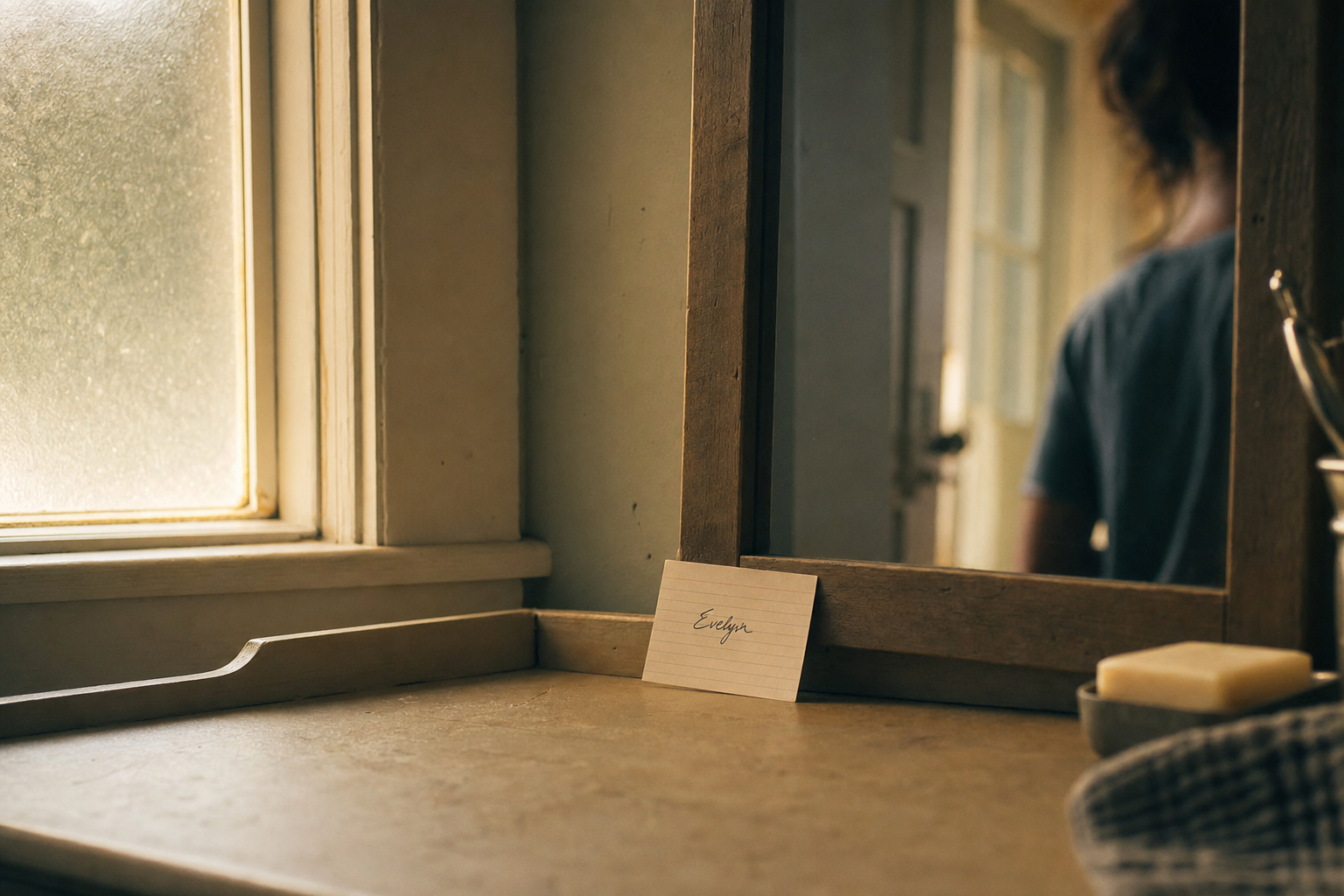
So write one name down this week and put the card where you'll see it every morning, on the bathroom mirror or the dash of your car. Then do the single smallest true thing for that person before the week ends: tell them you prayed for them, or ask them one honest question about their life, or invite them somewhere they'd actually come. Not the whole hundred yards. One step. Then watch what God does with it.